Last Updated: November 8, 2026
Quick Summary
Tactical gear is good for beginner hunters when it solves a real hunting problem like carrying weight, staying dry, staying visible, or moving quietly, and bad when bought for looks instead of function. The most common beginner mistake is buying a full tactical loadout before the first season, and most of it stays in the truck. A single well-made chest rig or durable pack beats a full loadout every time.
- The essential beginner kit is seven items: legal firearm, safe ammunition, layered clothing, blaze orange, eye and ear protection, a simple pack, and a sharp knife.
- Tactical gear wins on load carrying, durability, and modularity; traditional hunting gear wins on warmth, silence, camouflage fit, and scent control.
- Test any rig by sitting still 20 minutes, walking 50 yards, and reaching for calls and tags without looking.
- Add gear only after your first season, based on what actually annoyed you in the field.
- Skip plate carriers, duty belts, tactical helmets, and bulk MOLLE pouches as a beginner.
Table of Contents
- Is Tactical Gear Good for Beginner Hunters? The Short Answer
- Essential Hunting Gear for Beginners: What You Actually Need First
- Tactical vs. Traditional Hunting Gear: Where Each One Wins
- Your Beginner Hunting Gear Checklist, Built in Stages
- Budget Hunting Gear for Beginners: Where to Spend and Where to Save
- Legal and Ethical Requirements Tactical Gear Can’t Solve
- What Tactical Gear to Skip as a Beginner
- Building Your First Hunting Kit at FAFO TACTICAL
- Frequently Asked Questions
Is Tactical Gear Good for Beginner Hunters? The Short Answer
Tactical gear is equipment designed around durability, modular attachment, and load carrying, often built for duty or defensive use.
Below, we break down what to buy first, what to skip, and where tactical pieces genuinely beat traditional hunting clothing and packs.
Watch out: the most common beginner mistake is buying a full tactical loadout before the first season.
Essential Hunting Gear for Beginners: What You Actually Need First
The essential hunting gear for beginners comes down to seven items: a legal firearm, safe ammunition, layered clothing, blaze orange, eye and ear protection, a simple pack, and a sharp knife. Everything else is optional until you have hunted a few times.
A beginner hunting gear checklist should be short enough to carry in one hand. If your list needs a second page, you are buying accessories, not essentials.
Safety Equipment and Safe Handling
Safe handling starts before the trigger. Treat every firearm as loaded, keep the muzzle pointed in a safe direction, and keep your finger off the trigger until you are ready to shoot (4 Primary Rules of Firearm Safety • NSSF).
Eye protection and hearing protection are not optional. A rimfire rifle is quieter than a centerfire, but it still damages hearing over time. Foam plugs cost little and work.
Blaze orange matters more than camouflage in most rifle seasons. Blaze orange requirements vary by state and species. Check your state’s hunting regulations before opening day.
Optics, Navigation, and Field Tools
Binoculars do more for a beginner than a scope upgrade. A decent pair of 8×42 binoculars lets you spot wildlife and judge distance before you ever raise the rifle.
Navigation is the other half. A phone with an offline map and a spare battery covers most trips. Add a compass as backup.
Field tools are simple: a fixed-blade knife, a small first-aid kit, and a headlamp. That is the whole list.
Tactical vs. Traditional Hunting Gear: Where Each One Wins
Tactical vs. traditional hunting gear is not a contest with one winner. Tactical gear wins on load carrying, durability, and modular setup. Traditional hunting gear wins on warmth, silence, camouflage patterns, and scent control.
(/durable-tactical-gear-professional-use/) lays them out side by side.
Your Beginner Hunting Gear Checklist, Built in Stages
A staged kit beats a big kit. Buy the minimum, hunt one season, then add gear based on what actually annoyed you in the field.
Stage 1: The Minimal Kit
- Legal rifle or shotgun in a beginner-friendly caliber
- Matching ammunition from a known maker
- Base layer plus insulating layer plus outer shell
This kit covers a full season of deer hunting in most terrain. Nothing here is tactical, and nothing here is wasted money.
Stage 2: Add After Your First Season
- Chest rig or belt kit for calls and tags
- Better boots after you know your terrain
- Rangefinder if you hunt open ground
The pattern is simple. Add gear only after the field tells you what is missing.
Budget Hunting Gear for Beginners: Where to Spend and Where to Save
Budget hunting gear for beginners should follow one rule: spend on safety and accuracy, save on style. A cheap rifle that shoots straight beats an expensive one that does not fit you.
Spend here:
- Firearm and ammunition
- Boots, because bad boots end trips
- Optics, because you cannot shoot what you cannot see
Save here:
- Camouflage patterns, since blaze orange covers most of it anyway
- Gadgets and accessories
- Upgraded slings and cases
- Brand-name tactical clothing
A common mistake is spending the whole budget on a rifle and then hunting in jeans. Weather protection and layering keep you in the field longer than a nicer barrel ever will.
Legal and Ethical Requirements Tactical Gear Can’t Solve
No piece of gear makes a hunt legal. Licensing, season dates, bag limits, and equipment restrictions come from state wildlife agencies and federal law, and they apply no matter what you carry. This is the part of the beginner decision that tactical gear marketing rarely addresses, and it can end a season before it starts.
Licensing and hunter education
Many states require a hunter education course before you can buy a hunting license or hunt. Check your state wildlife agency for current requirements. The course covers firearm safety, wildlife identification, and hunting ethics, and it is usually available in person or online.
Licenses are species- and season-specific. A deer license is not a turkey license, and a resident license is not a nonresident license.
Blaze orange and visibility rules
Blaze orange matters more than camouflage in most rifle seasons. Orange visibility requirements, allowed garment types, and exceptions vary by state and species. Check your state’s hunting regulations before opening day, because a tactical camouflage pattern does not satisfy an orange requirement.
Equipment restrictions
Equipment restrictions are where tactical gear choices can create legal problems. Common restrictions include:
- Caliber and cartridge rules. Some states restrict certain calibers for certain species, and some prohibit rifles entirely in certain areas in favor of shotguns or muzzleloaders.
- Magazine capacity limits. Several states limit magazine capacity for hunting, and the limit can differ from what is legal to own.
- Suppressors and short-barreled rifles. Suppressors and short-barreled rifles are regulated under federal law, and state rules differ. Verify current federal and state requirements before you buy.
- Weapon lights and night vision. Legal shooting hours usually end before you need a weapon light, and many states restrict or prohibit hunting with night vision, thermal optics, or artificial light.
If your plans include a suppressor, read our guide on how to check if a suppressor is legal before you buy anything. And if you are ready to start the paperwork, our walkthrough on how to complete NFA paperwork correctly covers each form step by step.
Ethics alongside the law
Ethics sit alongside the law. A clean, quick kill and full use of the animal are the standard, and gear does not substitute for practice at the range.
Watch out: a piece of gear that is legal to own can still be illegal to hunt with in your state or during your season, so verify the hunting-specific rule, not just the ownership rule, before you take it afield.
What Tactical Gear to Skip as a Beginner
Most tactical gear is a poor first purchase. The list below is where beginners waste the most money.
- Plate carriers. Heavy, hot, and useless for hunting. Skip.
- Duty belts with holsters. You are carrying a rifle, not a sidearm for patrol.
- Tactical helmets. No legal or practical use in a hunting context.
- Weapon lights rated for entry use. Legal shooting hours usually end before you need one.
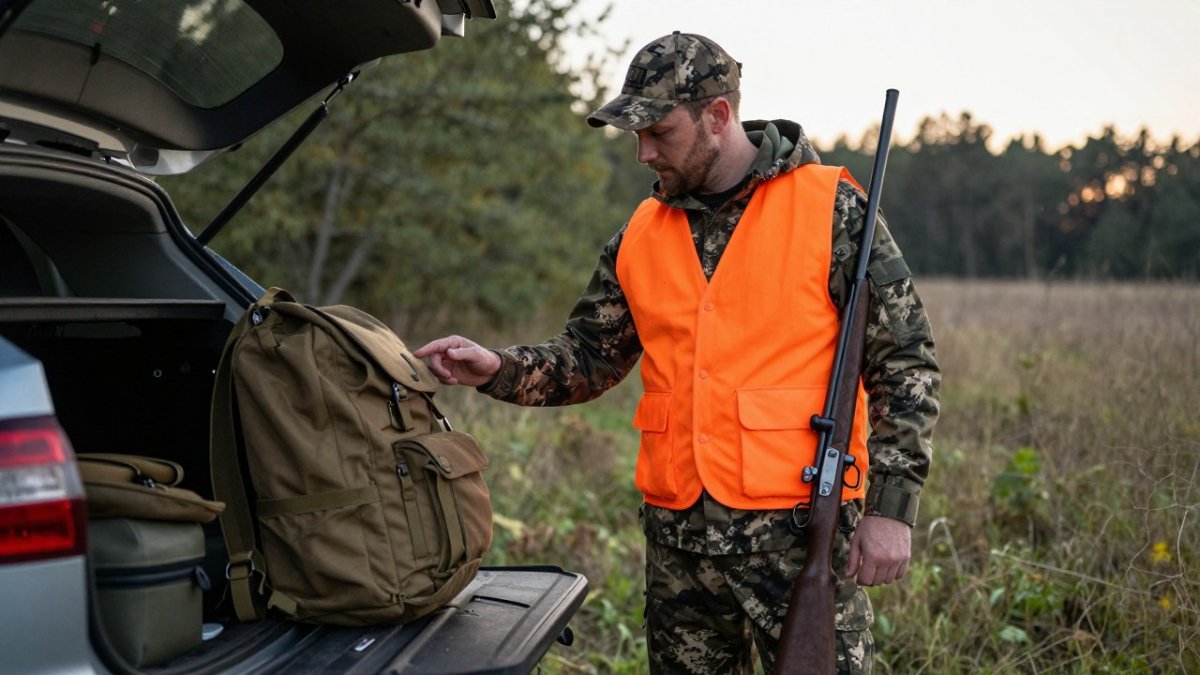
What most guides miss is that tactical gear shines in small doses. A single well-made chest rig or a durable pack beats a full loadout every time.
Building Your First Hunting Kit at FAFO TACTICAL
The fastest path to a working kit is to buy the essentials once, from a source that stocks them and handles the transfer properly.
FAFO TACTICAL offers handguns, rifles, shotguns, ammunition, tactical gear, and Class 3 NFA items. Our integrated FFL transfer scheduling service is part of the order process. For hard-to-find items, contact us to ask about availability.
You do not need to be a hardcore prepper to shop here.
The gap between a beginner who tags out and one who quits is rarely the gear.
Frequently Asked Questions
What gear do I need for my first hunt?
Start with the essentials: a legal firearm in a manageable caliber, ammunition, eye and hearing protection, weather-appropriate layers with blaze orange where required, a simple backpack, binoculars, a knife, a first-aid kit, and navigation. Tactical gear is optional at this stage. Most beginners are better served by lightweight, quiet equipment that fits the specific game and terrain they are hunting than by load-bearing rigs built for other purposes.
Can I use a tactical shotgun for hunting?
Yes, in many cases. A tactical shotgun with a shorter barrel and adjustable stock can work for deer with slugs or for upland game, provided it meets your state’s minimum barrel length and gauge rules and you use the correct load. Check your state wildlife agency’s regulations before the season, since magazine capacity limits and shot size restrictions vary. A dedicated hunting barrel or choke may improve performance depending on the game.
Is a .308 overkill for a deer?
Not overkill, but it is more cartridge than a new hunter needs in most situations. A .308 Winchester delivers ample energy for deer at typical ranges, though recoil can make practice less comfortable for a beginner. Lighter-recoiling options like .243 Winchester or 6.5 Creedmoor are common first-deer choices. The right caliber depends on your range, terrain, and how much practice you can commit to before the season.
What tactical gear is actually useful for hunting?
A few tactical items translate well: a durable load-bearing backpack, weatherproof layers, a quality fixed-blade knife, and reliable optics. Chest rigs and plate carriers generally add weight and noise without helping you hunt. The useful test is simple: does the item help you move quietly, stay comfortable in weather, or carry essentials without excess bulk? If not, leave it home and put the money toward ammunition and practice.