Last Updated: November 15, 2026
Quick Summary
To store tactical gear properly, keep it clean and fully dry, then place it in a cool, dry room off the floor and out of direct sunlight. Sort items into working sets, control humidity around 40 to 50 percent, and inspect the storage on a regular schedule.
- Let gear air dry completely before putting it away, since trapped moisture causes mildew and rust.
- Keep indoor humidity between about 40% and 50%; above 60%, mold and mildew grow on fabric and leather.
- Store gear at room temperature, roughly 60 to 75 degrees Fahrenheit, and avoid attics, sheds, and vehicles.
- Hang plate carriers and vests by the shoulder straps rather than folding them to prevent creases.
- Inspect long-term storage every three months and replace desiccant packs once they are saturated.
Table of Contents
- Why Proper Tactical Gear Storage Protects Your Investment
- Sorting Your Tactical Gear by Purpose and Working Set
- Choosing Tactical Gear Storage Ideas for Your Space and Budget
- Building a DIY Tactical Gear Locker Step by Step
- Setting Up a Tactical Gear Rack for Plate Carriers, Vests, and Firearms
- Controlling Humidity, Light, and Temperature for Long-Term Reliability
- Scheduling Inspections and Setting Up Your Storage Checklist
- Frequently Asked Questions
Why Proper Tactical Gear Storage Protects Your Investment
Good tactical gear costs real money, and the wrong storage can wreck it fast, so knowing how to store tactical gear properly matters. Gear is often stored in damp garages, hot trunks, and crowded closets, where it can go unused until it fails. Learning how to store tactical gear correctly protects your investment and keeps it ready when you need it.
Moisture is the biggest threat. Wet nylon can mildew, and metal parts can rust. Heat warps plastics and breaks down adhesives. Direct sunlight fades fabric and degrades straps over time.
A simple setup prevents most of these problems:
- Keep gear in a cool, dry room, away from exterior walls, and consider a purpose-built shotgun case with external storage to protect long guns.
- Store items off concrete floors to avoid ground moisture
- Keep items out of direct sunlight
- Let gear air dry completely before putting it away
Watch out: Storing gear in a sealed plastic tote right after a wet range day traps moisture. Let everything dry fully first.
Sorting Your Tactical Gear by Purpose and Working Set
Sorting comes before shelving. Group your gear by how you use it, not by type alone. A working set is the group of items you need together for one purpose, such as a home defense kit or a range day kit.
Start by sorting into three groups:
- On-body gear: Items you wear or carry daily, like a belt, holster, or plate carrier
- Duty or mission gear: Items for a specific activity, like a hunting pack or training kit
- Home-stored gear: Backup items, spare magazines, and extra clothing
Keep each working set complete. A kit missing its magazines or batteries fails when you need it most. Use a packing list for each set and check it every few months.
Choosing Tactical Gear Storage Ideas for Your Space and Budget
The right storage depends on your space, your access needs, and your budget. You do not need an expensive setup to protect your gear well, but you do need to match the container to the room. The same plate carrier that survives a climate-controlled closet will mildew in a garage in a humid climate.
Here are the common options, from cheapest to most involved:
| Option | Approximate Cost | Best For | Main Trade-off |
|---|---|---|---|
| Clear plastic bins with lids | Low | Small, loose items, spare magazines | Traps moisture if sealed damp; no airflow |
| Canvas or nylon gear bags | Low to moderate | Soft gear, clothing, range bags | Breathes but offers little crush or pest protection |
| Wall-mounted racks | Moderate | Plate carriers, vests, belts | Exposes gear to light and dust unless covered |
| Lockable steel cabinet | Moderate to high | Firearms, ammunition, valuables | Heavy; needs anchoring; can hold humidity |
| Custom DIY locker | Low to moderate | Large collections, dedicated kits | Takes a weekend and basic tools to build |
Match the storage to the room. A closet stays dark and stable but limits airflow. A garage swings in temperature and humidity and is the worst place for nylon, leather, and electronics unless you seal and dehumidify. A vehicle trunk is the harshest option of all: heat and vibration degrade adhesives, batteries, and optics. A dedicated locker or safe room gives the best control but costs the most.
Choose containers that breathe if your gear sees sweat or rain. Sealed containers are fine for dry items, but never seal damp gear inside. A common pattern is a breathable bag for range-day gear and a sealed bin with desiccant for long-term storage of dry items.
Watch out: A steel cabinet in an unheated garage can condense moisture on the inside walls when the temperature drops, so add a hygrometer and desiccant before you trust it with armor or optics.
Building a DIY Tactical Gear Locker Step by Step
A DIY locker keeps gear organized and out of the way. You can build a simple one in a weekend with basic tools.
- Pick the location. Choose a dry interior wall. Avoid spots near water heaters or exterior doors.
- Measure your gear. Measure your tallest and widest items, plus room to reach them.
- Build or buy the frame. Use treated lumber or metal shelving. Leave a gap between the frame and the wall for air flow.
- Add shelves and hanging points. Use adjustable shelves so you can change the layout later.
- Add a lock or door. A lockable door keeps out kids, guests, and theft.
- Label each section. Label bins and shelves by working set.
- Add a moisture indicator. A small hygrometer shows when humidity rises.
Watch out: Do not store firearms or batteries in a locker that gets hot or damp. Check local and state laws on firearm storage, especially if children may access the home.
Setting Up a Tactical Gear Rack for Plate Carriers, Vests, and Firearms
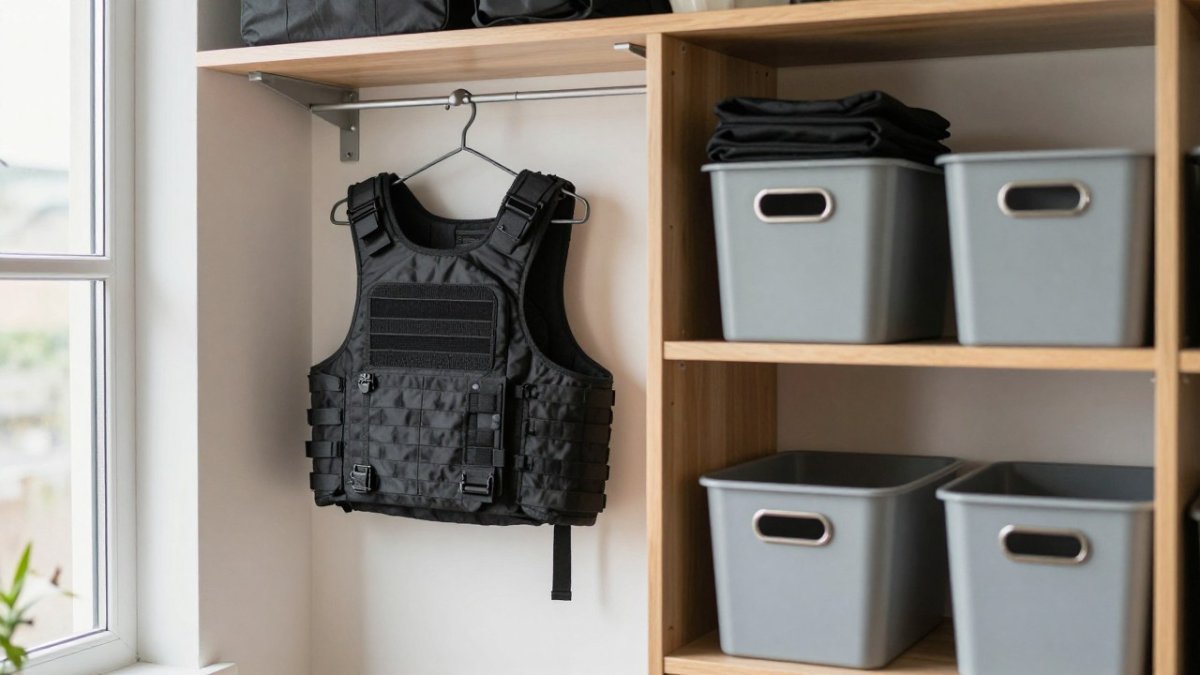
A wall rack keeps plate carriers and vests in shape. Hanging them by the shoulder straps, not folding them, prevents creases in the armor and padding.
Set up your rack like this:
- Mount the rack on a wall stud for support
- Hang plate carriers on wide, padded hooks
- Keep armor plates out of the carrier when storing long term
- Store rifles and shotguns in a locked gun rack or safe
Keep firearms unloaded and secured. Store ammunition separately from firearms. Follow the storage rules in your state and any local rules that apply.
Controlling Humidity, Light, and Temperature for Long-Term Reliability
Environment decides how long your gear lasts. Three factors matter most: humidity, light, and temperature.
Humidity: Keep indoor humidity between about 40% and 50%. Above 60%, mold and mildew grow on fabric and leather. A small dehumidifier or silica gel packs help in damp rooms.
Light: Keep gear out of direct sunlight. UV light fades nylon, cracks plastic, and breaks down straps. Store items in a closet or a cabinet with doors.
Temperature: Aim for room temperature, roughly 60 to 75 degrees Fahrenheit. Avoid attics, sheds, and vehicles. Extreme heat weakens adhesives and batteries. Extreme cold can make some plastics brittle.
Ventilation prevents trapped moisture. Leave space between items and the wall, and crack a door or use a small fan in closed storage.
Batteries: Remove batteries from optics and electronics for long storage, and keep them at a moderate charge. Check the manufacturer’s guidance for your specific model.
Scheduling Inspections and Setting Up Your Storage Checklist
Storage only works if you check on it. Set a schedule and stick to it, and inspect by material rather than by glance.
Short-term storage (under 3 months):
- Clean and dry gear before storing
- Store in a labeled bin or bag
- Check the container once a month for moisture or pests
Long-term storage (3 months or more):
- Clean, dry, and inspect everything first
- Lightly oil metal parts and check for rust
- Store with desiccant packs in a dry locker
- Inspect every three months and log the date
Inspect by material. Nylon and canvas: look for mildew spots, frayed stitching, and stiff or cracked coatings. Armor plates: check the carrier seams and padding, and confirm the plate has not been dropped or stored under heavy weight. Optics: check lens coatings, turret feel, and battery compartment corrosion. Electronics: remove batteries, check contacts, and confirm the device powers on. Footwear: check soles for separation and uppers for mold. Leather: look for cracking and white bloom that signals moisture.
Use this checklist for each working set:
- Gear is clean and fully dry
- Batteries removed or checked
- Firearms unloaded and secured
- Items stored off the floor
- Container labeled with contents and date
- Humidity under 50 percent
- Inspection date written on the label
- Desiccant still active (replace if saturated)
- No mildew, rust, or corrosion visible
- Expiration dates on medical supplies checked
Watch out: Desiccant packs stop working once saturated and can release moisture back into the container, so replace or recharge them on the same schedule as your inspection.
Review your working sets twice a year. Replace worn straps, check expiration dates on any medical supplies, and restock what you used. Ready gear is gear you can trust.
Ready to stock your setup? Visit the FAFO TACTICAL website to browse current tactical gear and find pieces that fit your working set. Shop tactical gear at FAFO TACTICAL
Frequently Asked Questions
Should guns be stored vertically or horizontally?
Most owners store long guns in a vertical rack or horizontal gun cabinet, depending on available space. Either works if the firearm is unloaded, cleaned, and kept out of direct sunlight and moisture. Vertical racks save floor space but should hold rifles by the stock and barrel, not the optic, to avoid stress on mounts. Horizontal storage in a locked cabinet is simpler to secure. Whichever you choose, keep ammunition stored separately and locked, and follow your state’s safe storage requirements.
How do I keep tactical gear dry and prevent mold?
Store gear in a cool, dry place with airflow. Before storing, make sure nylon, armor inserts, and footwear are fully dry, since trapped moisture is the main cause of mold and odor. Use breathable storage such as mesh bags or open racks rather than sealed plastic tubs for damp items. A basic dehumidifier or moisture absorbers in closed lockers helps keep relative humidity below about 50 percent. Check items every few months for musty smells or white spotting.
How should I store a plate carrier and other load-bearing gear?
Hang plate carriers and vests on a sturdy rack or hook rather than stacking them, so the shape holds and padding does not compress. Remove hard armor plates from the carrier and store them flat or upright in a protective sleeve. Keep hook-and-loop fasteners closed to prevent snagging, and avoid storing equipment on concrete floors, where moisture can wick into straps. Inspect stitching and buckles before each storage cycle.
How often should I inspect stored tactical gear?
Inspect stored tactical gear at least every three to six months, and after any exposure to moisture, heat, or a long period of use. Check straps, stitching, zippers, buckles, and magazine springs. Look at optics and electronics for condensation and confirm batteries are removed from devices you will not use for long periods. Keep a dated log so you can track what was checked and when maintenance was last performed.